Why GSA Schedule Holders Still Lose Bids on Price Alone, and What That Means for Owner Oversight
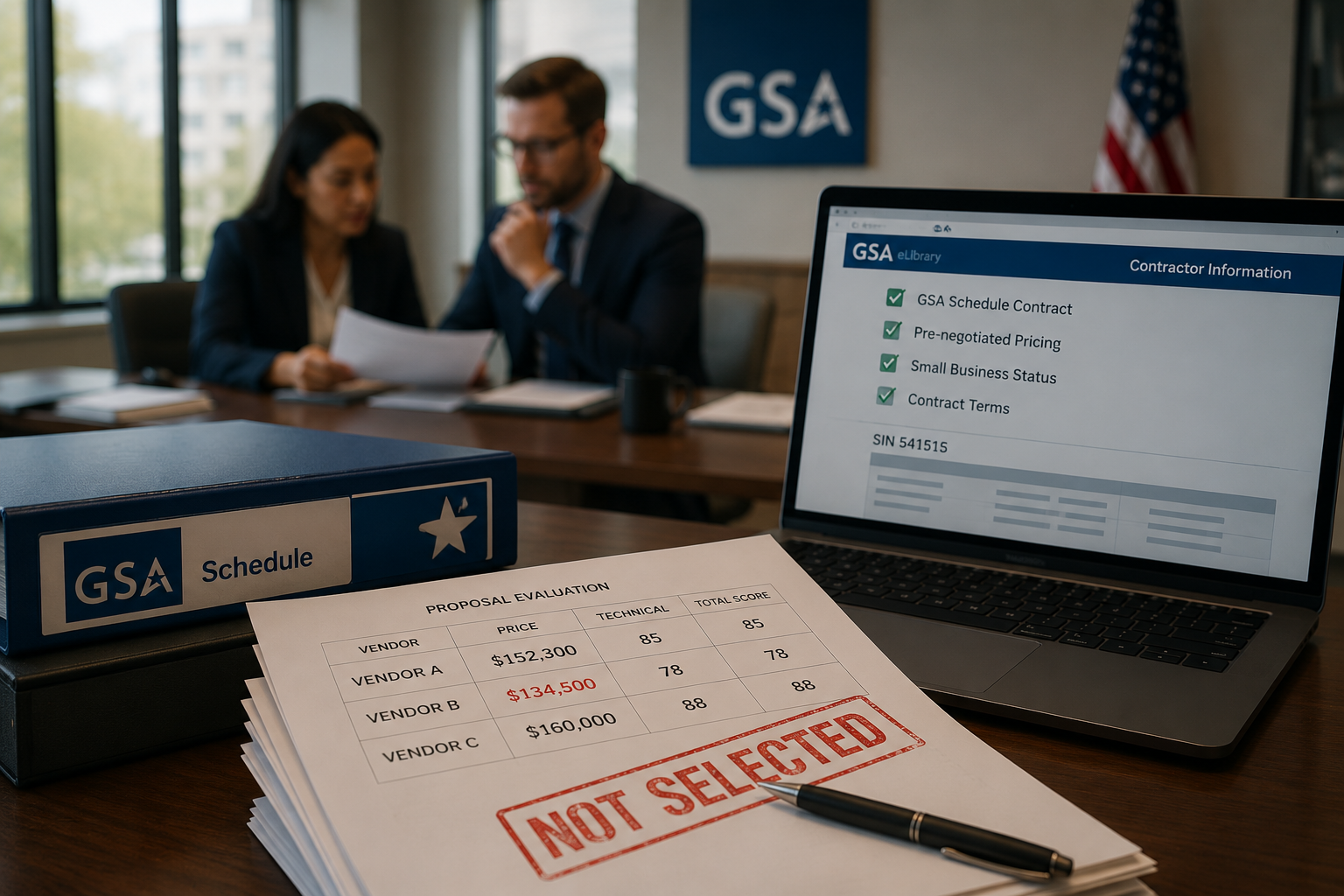
Getting on the GSA Schedule was supposed to mean something. A vetting process, a demonstrated track record, a set of terms already negotiated so the government doesn’t have to renegotiate them project by project. In practice, a lot of federal source selections still collapse the entire evaluation down to price, treating GSA Schedule status as a box that’s already checked rather than a signal worth weighing against the alternative bidder in front of them.
That’s not a complaint about the procurement system being unfair to Schedule holders. It’s a warning to federal program owners about what they’re actually buying when price becomes the deciding factor on a capital project where the real risk shows up eighteen months after award, not at the bid table.
What Lowest Price Technically Acceptable Actually Optimizes For
Lowest Price Technically Acceptable evaluation is designed for exactly what the name says. Once a bidder clears the technical acceptability threshold, price becomes the deciding factor, with no additional credit for exceeding that threshold. That’s a reasonable framework for commodity procurement, where technical differentiation above the minimum genuinely doesn’t matter to the outcome.
It’s a much riskier framework for project controls, program management, or construction management services on a complex capital project, where the difference between a technically acceptable proposal and an exceptional one shows up specifically in the parts of the job that are hardest to specify in advance. How a controls team handles an unexpected schedule risk. How a program manager navigates a contracting officer relationship under pressure. How a scheduling team responds when a subcontractor’s equipment delivery slips six months into a twenty-four month project. None of that is easily reducible to a technical acceptability checklist, which means LPTA evaluation on this type of work is often comparing bidders on the one dimension, price, that says the least about how the engagement will actually go.
Why GSA Schedule Status Doesn’t Fix This
The GSA Schedule vetting process establishes that a firm has a track record, negotiated rates, and contract terms already in place. It does not, and was never designed to, differentiate between Schedule holders on the specific dimensions that matter most for a given capital project. Two firms can both hold the same Schedule, under the same SIN, and be genuinely different in their depth of experience with the specific sector, the specific risk profile, or the specific stakeholder dynamics a given federal program actually needs managed.
When an LPTA evaluation treats Schedule status as satisfying the technical threshold and then decides on price, it’s effectively treating all Schedule holders as interchangeable within that threshold. For commodity purchases, that’s often close enough to true. For program management or project controls on a complex build, it usually isn’t, and the program finds out how far from true it was only once the engagement is underway and the cheapest technically acceptable option turns out to be technically acceptable in the narrowest possible sense.
What This Means for Federal Owner-Side Oversight
If price-driven award is going to remain common on this category of work, and there’s no particular reason to expect that to change, the offsetting move is stronger owner-side oversight built into the program from day one, rather than assumed to be embedded in the awarded firm’s own quality. That means the federal program’s own project controls function, whether internal staff or an independent owner-side firm, needs the authority and the visibility to catch problems early, regardless of which firm won the award on price.
It also means program owners evaluating their own procurement approach should be honest about where LPTA genuinely fits and where it doesn’t. A commodity IT hardware purchase and a program management engagement for a billion-dollar capital program are not the same kind of decision, even if both happen to run through a similar Schedule and a similar evaluation framework. Treating them the same isn’t neutral. It’s a decision to accept more delivery risk in exchange for a lower headline price, and that tradeoff deserves to be made deliberately, not by default.
The firms that do the best work on federal capital programs aren’t always the cheapest Schedule holders. They’re often the ones a program had to actively choose to pay more for, against an evaluation framework quietly built to reward the opposite choice.