Why Hospital Renovation Schedules Fail: Infection Control Risk Assessment Sequencing
An infection control risk assessment gets treated, on too many hospital renovation schedules, as a form completed once during preconstruction and filed away. That’s the opposite of how ICRA is supposed to function. It’s a classification framework that determines what containment measures are required, which directly shapes construction sequencing, trade access, and how work has to be phased around an occupied, functioning hospital.
What ICRA Actually Classifies
An infection control risk assessment evaluates two things together: the scope of construction activity, ranging from minor activities that generate no or minimal dust through major demolition and construction, and the risk group of the patient population in the surrounding area, ranging from lowest risk areas to highest risk areas like protective environments and areas housing immunocompromised patients. Combining those two factors produces a required containment class, commonly referenced from Class I through Class IV, that dictates the specific barrier, pressure, and filtration requirements construction has to meet in that location.
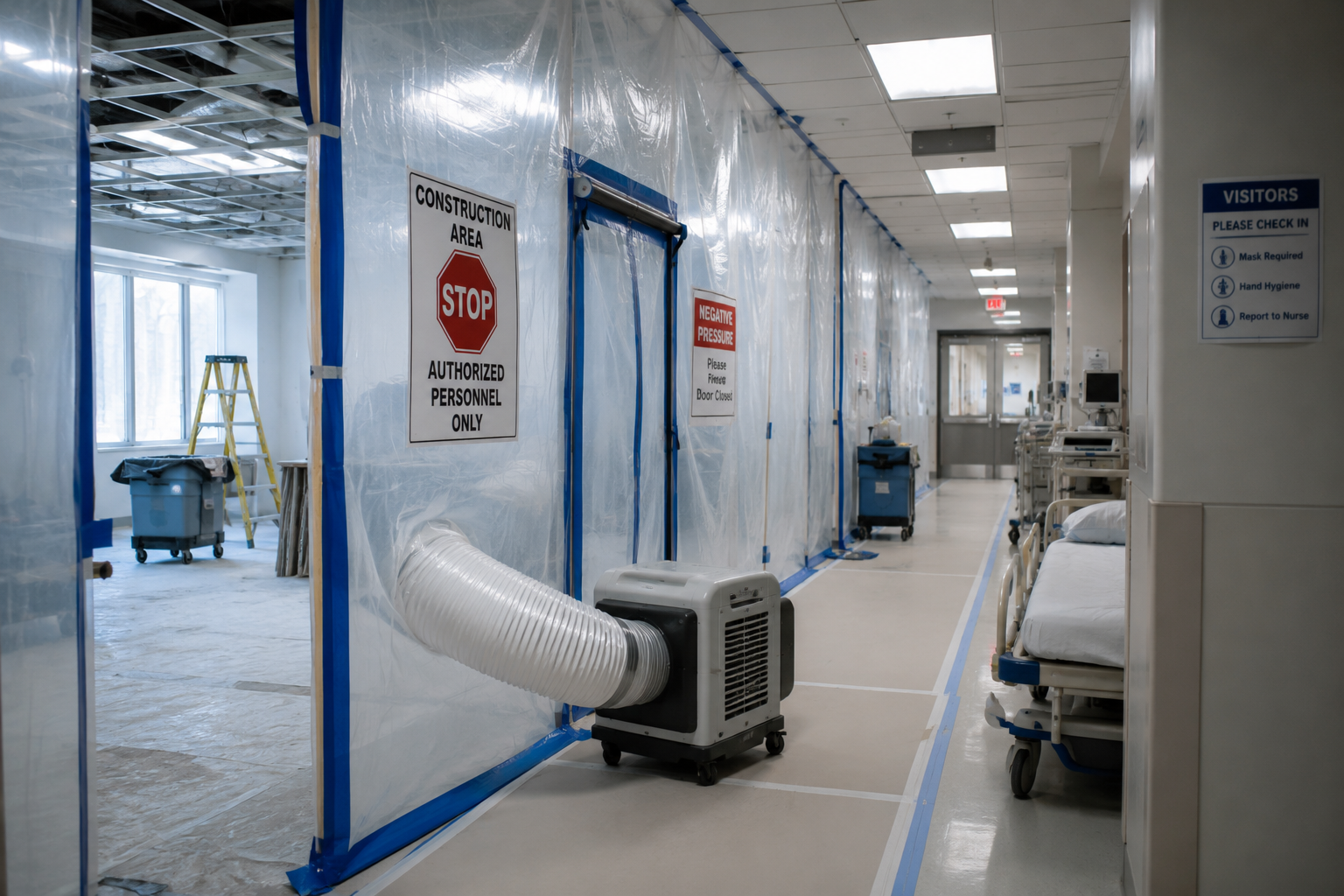
A Class I project might require little more than dust control during minor work. A Class IV project, major construction near a high risk patient population, typically requires full barrier construction, negative pressure containment with HEPA filtration, and specific protocols for how workers and materials move in and out of the containment zone.
Why the Classification Drives Sequencing, Not Just Containment Method
The containment class often determines whether an area even qualifies for occupied-hospital construction at all. A Class IV requirement adjacent to a highly sensitive patient population may not be feasible to execute safely while that population remains in place, forcing a phasing decision, temporarily relocating patients, working during a period of reduced census, or resequencing the project scope, that has to be made before the schedule can even be built, not discovered once construction is underway.
Barrier and negative pressure setup and teardown are themselves scheduled activities with real duration. Constructing a compliant temporary barrier, establishing and verifying negative pressure, and eventually tearing that containment down once work is complete are not instantaneous events. They add duration on both ends of the actual construction activity, and a schedule that shows only the construction work itself, without the containment setup and teardown bookending it, understates the real time required.
Adjacent area classification can constrain which trades can be on site simultaneously. If one zone requires Class IV containment and an adjacent zone is under a lower classification, material and worker movement between those zones has to follow protocols that limit how freely trades can move through the building. A schedule built purely around trade logistics, without reference to ICRA zone boundaries, can plan movement patterns that violate containment protocols the moment work actually starts.
Verification and monitoring requirements continue for the life of the containment, not just at setup. Many ICRA protocols require ongoing monitoring of pressure differentials and periodic inspection of barrier integrity for as long as the containment is active. That’s an ongoing activity with its own duration and its own resource requirement, not a one-time inspection at the start.
Where This Actually Breaks Down on Real Projects
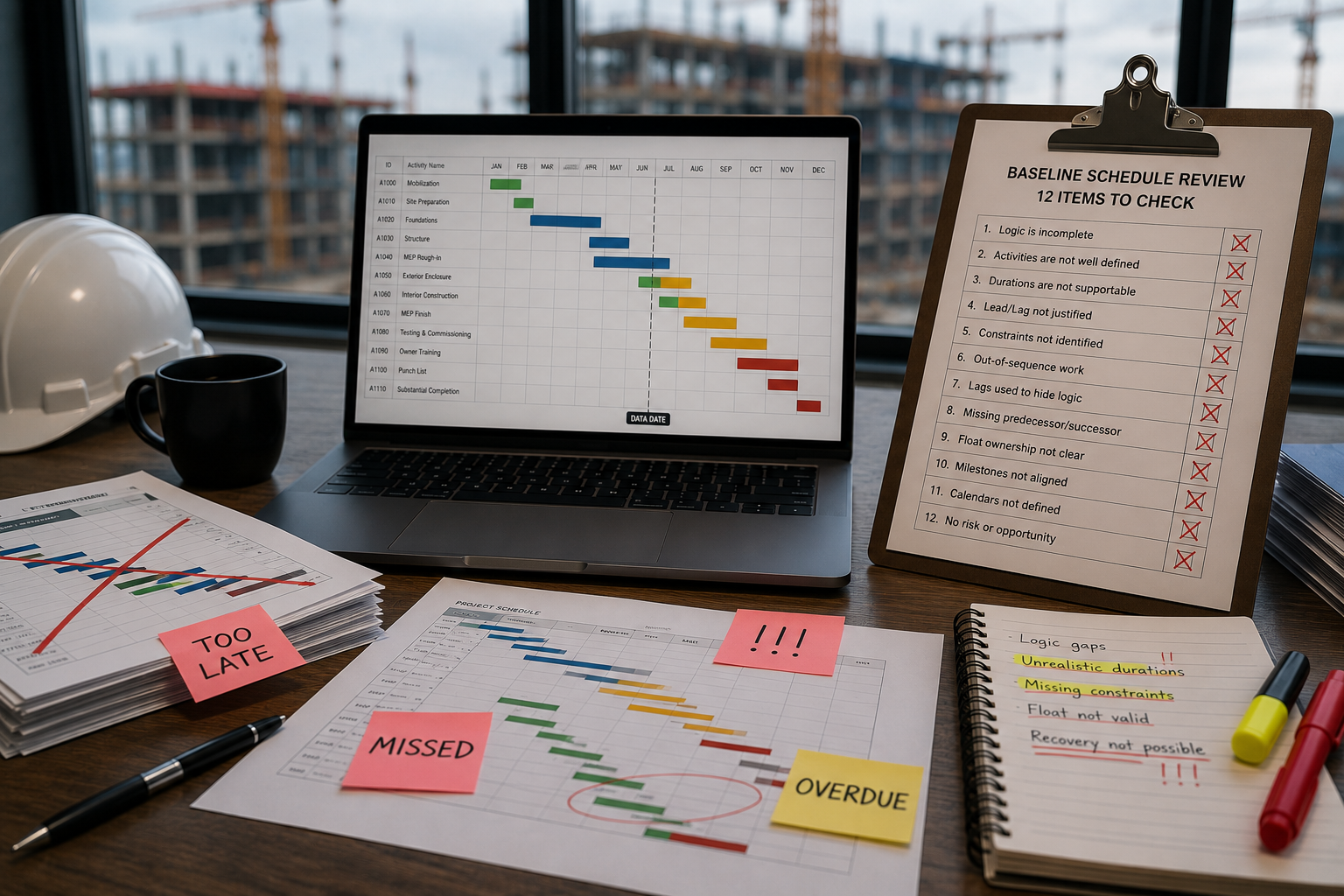
The common failure pattern looks like this. The ICRA classification gets completed during preconstruction, correctly, and then the master schedule is built using standard trade sequencing logic that doesn’t reference the classification at all. Barrier construction gets folded into general mobilization. Teardown gets folded into general demobilization. Adjacent zone movement restrictions aren’t reflected in how trades are sequenced through the building. The project proceeds reasonably on schedule until an infection control practitioner flags a protocol violation, work stops while the issue is resolved, and the schedule absorbs a delay that a classification-aware sequence would have avoided from the start.
Frequently Asked Questions
What is ICRA in hospital construction? Infection control risk assessment is a classification framework combining the scope of construction activity with the infection risk of the surrounding patient population to determine a required containment class, typically ranging from Class I through Class IV, each with specific barrier, pressure, and filtration requirements.
Why does ICRA classification affect construction scheduling, not just containment method? Higher containment classes can require full barrier construction and negative pressure setup and teardown, both of which add real duration to a project beyond the construction work itself. Classification can also constrain which zones can have simultaneous trade activity and, in some cases, whether the project is feasible to execute in an occupied area at all without relocating patients.
What’s the most common scheduling mistake with ICRA? Completing the classification correctly during preconstruction but then building the master schedule using standard trade sequencing logic that doesn’t reflect the containment setup, teardown, and monitoring requirements the classification actually demands, leading to work stoppages when protocol violations are caught mid-project.
Do ICRA containment requirements need ongoing monitoring during construction? Yes. Many ICRA protocols require ongoing verification of pressure differentials and periodic barrier integrity inspection for the entire duration containment is active, which is a continuing scheduled activity rather than a one-time setup inspection.