Why Transportation Capital Programs Need Portfolio-Level Schedule Risk Analysis, Not Project-Level
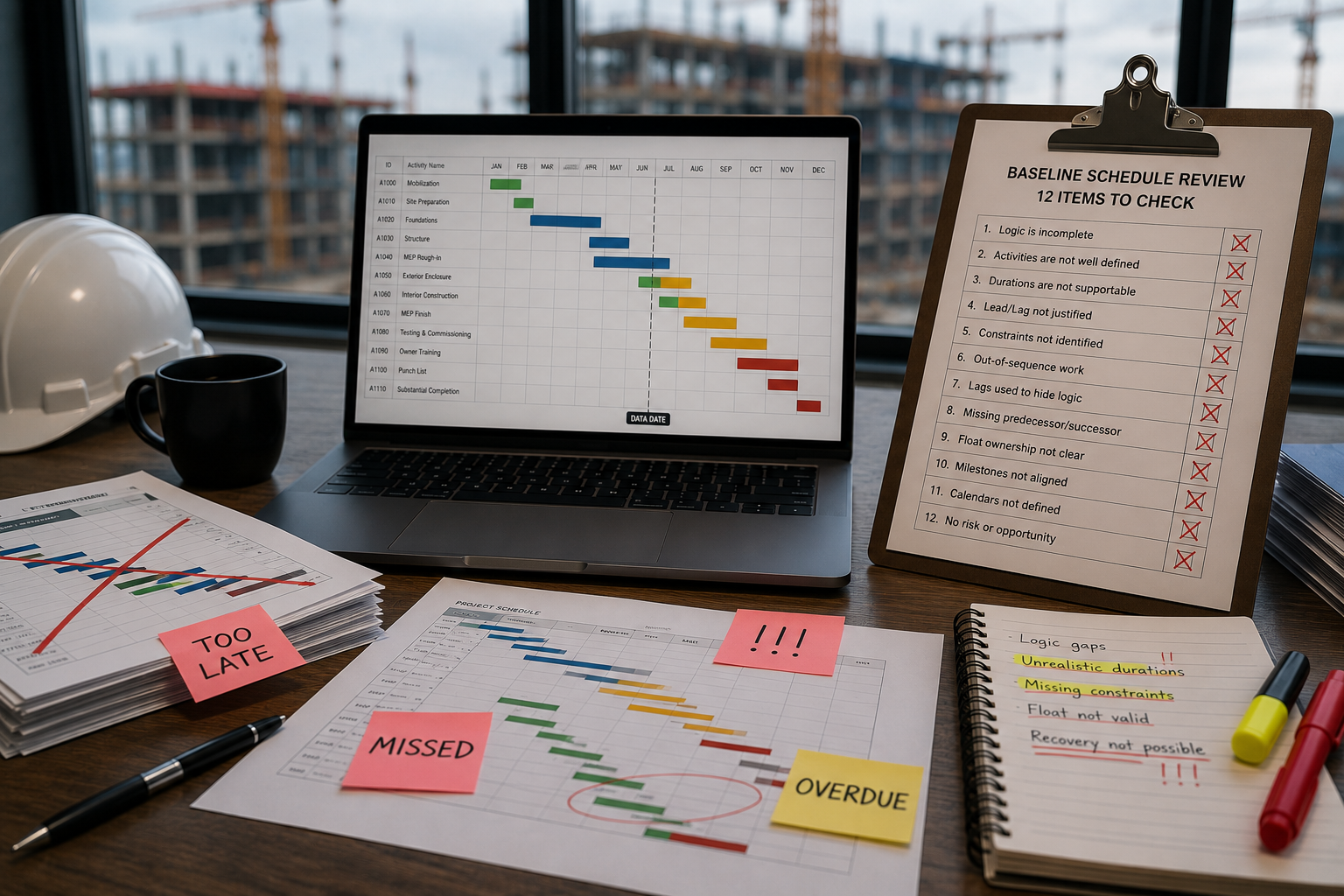
Schedule risk analysis on transportation capital programs is usually performed project by project, each project’s schedule risk modeled in isolation, as if it were the only thing competing for resources across the agency’s entire program. That approach misses the risk category that most often actually determines whether a program of projects hits its collective dates: the shared resources, specialized crews, inspection staff, corridor access windows, that every project in the program is drawing from the same limited pool.
Why Project-Level Risk Analysis Misses the Real Constraint
A project-level schedule risk analysis typically models uncertainty in that project’s own activity durations, weather risk, procurement risk, design risk, and produces a probabilistic completion date range for that project alone. That’s useful information, but it implicitly assumes the resources that project needs, specialized flagging crews, signal technicians, inspection staff qualified for a specific system, corridor outage windows, will be available when that project’s schedule calls for them, independent of what every other project in the same program is also asking for at the same time.
On an agency running multiple concurrent transportation projects, that assumption is frequently wrong, and the gap between the assumption and reality is exactly the risk category project-level analysis structurally cannot see.
What Portfolio-Level Analysis Actually Captures
Shared specialized labor and equipment pools create risk that only appears when multiple projects’ demand is modeled together. A signal technician qualified to work on a specific rail system, or a crew certified for a specific type of flagging operation, may be a genuinely scarce resource across the entire agency’s program, not just a resource one project needs to plan around. Two projects both scheduling that resource for overlapping windows creates a conflict that neither project’s own risk model would ever surface, because each model only sees its own demand.
Shared corridor or system access, discussed in more detail in our related piece on flagging and outage windows, is a program-level resource by definition. If an agency’s rail system has a limited number of outage windows available across an entire year, every project depending on outage access is drawing from the same finite pool, and the real risk isn’t whether any single project’s requested windows are individually reasonable. It’s whether the sum of every project’s requested windows across the whole program actually fits the windows genuinely available.
Inspection and oversight staff capacity is a common, underappreciated program-level constraint. Agency inspection staff, or an owner-side controls team’s own personnel, have a finite capacity to actively oversee concurrent projects. A program that schedules five projects to all reach a critical inspection-intensive phase in the same quarter may be creating an oversight bottleneck that no individual project’s schedule risk analysis would ever flag, because oversight capacity isn’t typically modeled as a schedule resource at all.
What Portfolio-Level Risk Analysis Actually Looks Like
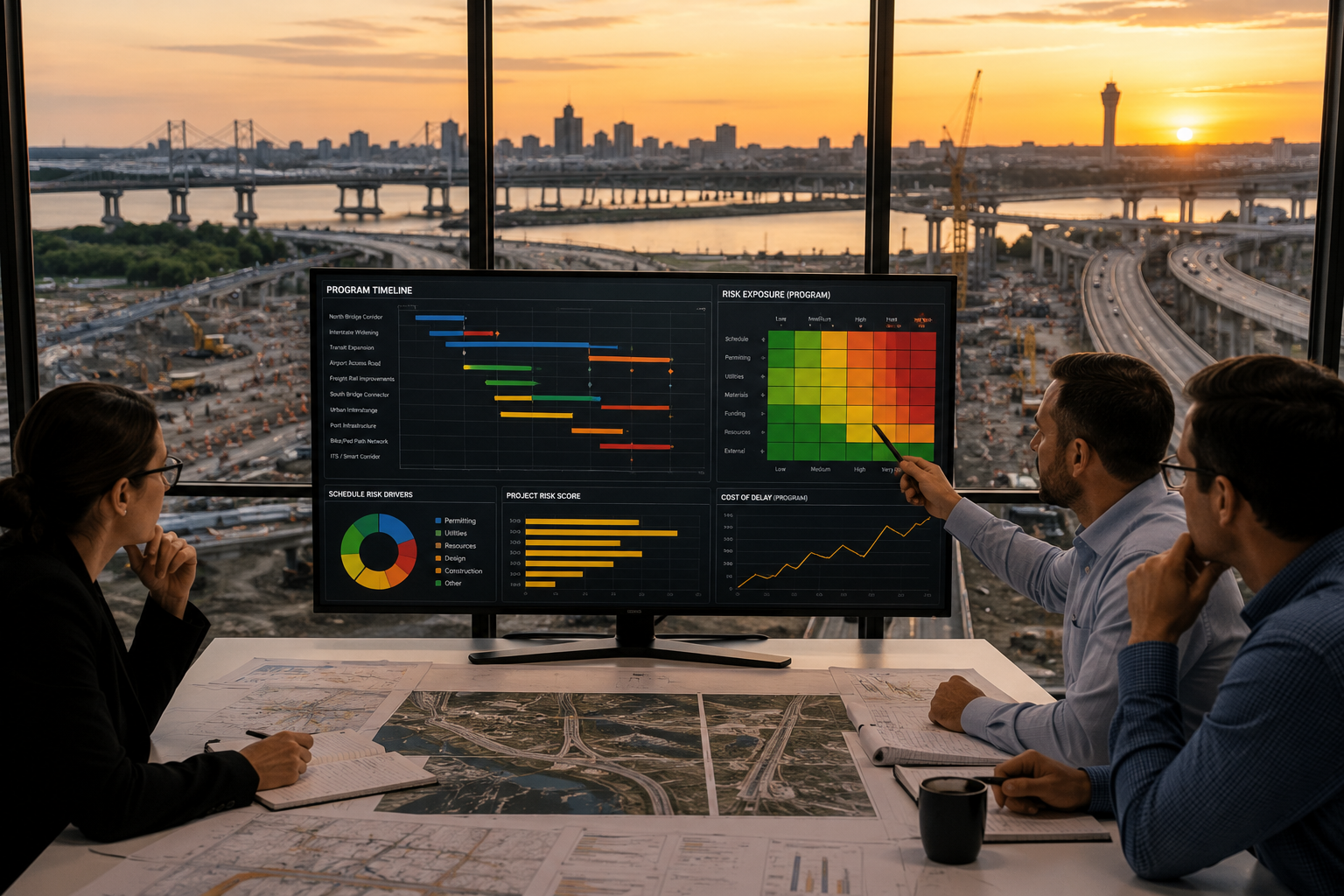
Rather than treating each project’s schedule as an independent probabilistic model, portfolio-level analysis aggregates the resource demand across every active and planned project in the program, modeling the same specialized labor pools, the same corridor access windows, and the same oversight capacity as shared, finite resources with real constraints, then testing whether the combined demand across the program actually fits what’s available. This surfaces conflicts and pinch points that no individual project’s schedule would show, specifically because those conflicts only exist at the level of the whole program’s combined demand, not at the level of any single project’s isolated plan.
Why This Matters More as Programs Grow
The gap between project-level and portfolio-level risk analysis grows wider as the number of concurrent projects in a program increases, and it grows especially fast when multiple projects in the program share the same corridor, the same rail system, or the same specialized labor market. An agency running a handful of geographically dispersed, resource-independent projects has less exposure to this gap than an agency running a dense program of projects all competing for the same limited pool of qualified crews and the same limited number of outage windows on the same system.
Frequently Asked Questions
What’s the difference between project-level and portfolio-level schedule risk analysis? Project-level analysis models schedule uncertainty for a single project in isolation, assuming resources like specialized crews or corridor access will be available as needed. Portfolio-level analysis models resource demand across every project in a program together, testing whether combined demand for shared, finite resources actually fits what’s genuinely available.
Why do transportation programs need portfolio-level risk analysis specifically? Because transportation projects frequently share scarce resources, specialized labor, corridor access windows, and inspection or oversight capacity, across multiple concurrent projects on the same system or agency program. Project-level analysis can’t surface a conflict that only exists when several projects’ demand is combined.
What kinds of risk does portfolio-level analysis catch that project-level analysis misses? Conflicts in shared specialized labor pools, competition for a limited number of corridor or system outage windows across multiple projects, and oversight or inspection staff capacity bottlenecks when several projects reach resource-intensive phases simultaneously.
Does every transportation agency need portfolio-level schedule risk analysis? The need grows with the number of concurrent projects in a program and how much those projects share resources, such as the same rail system, the same corridor, or the same specialized labor market. An agency with a small number of geographically independent projects has less exposure to this risk category than one running a dense, resource-sharing program.