32.Risk Registers That Get Updated Once and Then Ignored: The Operational Failure Behind It
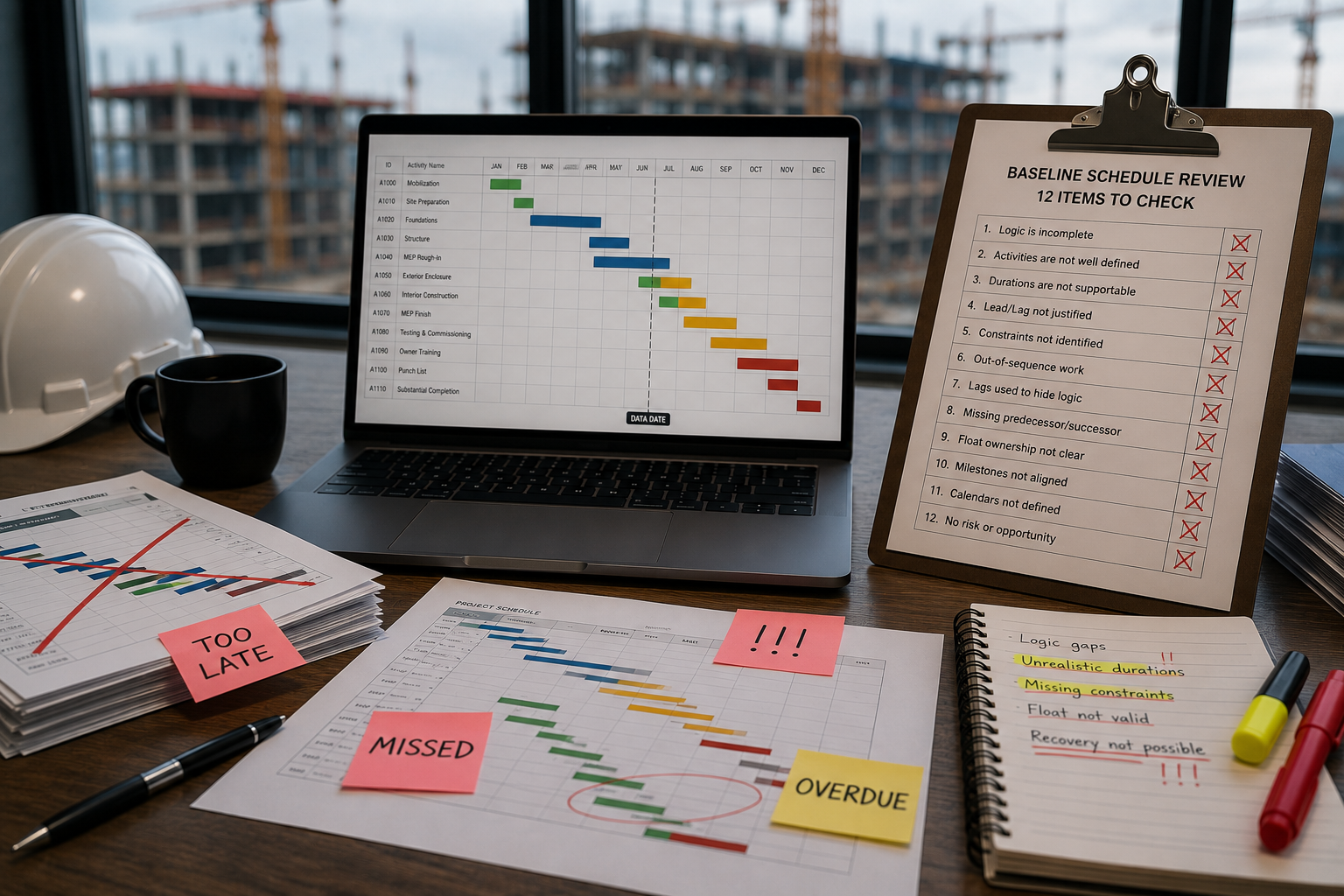
Almost every capital project has a risk register. Almost every risk register gets built carefully at kickoff, reviewed enthusiastically in the first project meeting, and then quietly stops changing. Six months later it still lists the same risks, at the same probability and impact ratings, as if nothing about the project has changed since the day it was written. That’s not a failure of judgment about which risks matter. It’s an operational process failure, and it’s a specific, fixable one once it’s named correctly.
Why This Pattern Is So Common
A risk register requires two things to stay useful: a defined update cadence that someone actually owns, and a real consequence for skipping that cadence. Most risk registers have neither. They’re built as a deliverable, satisfying a contract requirement or an internal governance checklist, rather than as an operational tool with an owner accountable for keeping it current. Once the initial deliverable is produced and accepted, there’s often no further trigger that forces anyone to revisit it, and a document with no forcing function to update it tends not to get updated, regardless of good intentions at kickoff.
What an Ignored Risk Register Actually Costs
Risks that were correctly identified early stop being weighted correctly as the project evolves. A risk rated as low probability at kickoff can become a near certainty six months later, based on how the project has actually unfolded, but a register that isn’t being actively revisited still shows the original, now-stale rating, giving false comfort to anyone relying on it for decision-making.
New risks that emerge after kickoff never make it into the register at all. A risk register frozen at its initial version has no mechanism for capturing a risk that wasn’t foreseeable at the time it was built, a supply chain disruption, a regulatory change, a newly discovered site condition. If the register isn’t a living document, these risks simply don’t exist anywhere in the project’s formal risk tracking, no matter how significant they become in practice.
The register becomes a compliance artifact rather than a decision-making tool, and everyone on the project quietly knows it. Once a project team recognizes that the risk register isn’t actually being used to inform real decisions, updating it competes for attention against work that’s perceived as more consequential, which reinforces the exact pattern that made it stale in the first place.
What an Actively Maintained Risk Register Actually Requires
A specific person owns the register, by name, not by role description. “The project controls team is responsible for the risk register” is not accountability. A specific person whose performance is actually evaluated in part on whether the register stays current is accountability.
The update cadence is tied to an existing meeting, not a standalone task competing for attention. A risk register review folded into an existing monthly schedule or progress review meeting, with a specific agenda slot, survives far better than a standalone risk review meeting that’s the first thing cancelled when the schedule gets busy.
Risk ratings require active justification to remain unchanged, not just an option to change them. A review process that asks “has anything changed about this risk” invites a default answer of no. A review process that requires each risk’s current rating to be actively reaffirmed with a stated reason, even if the reason is simply that nothing material has changed, creates a real moment of consideration rather than a passive scroll through an unchanged list.
New risk identification is an explicit standing agenda item, not an assumed byproduct of reviewing existing risks. A review that only walks through risks already on the register will never surface a risk that hasn’t been identified yet. The review needs an explicit, separate prompt asking what’s changed on the project that could represent a new risk not yet captured.
What This Means for Owner-Side Oversight
An owner reviewing a contractor’s or a project team’s risk management approach should ask less about the initial register’s quality, which is usually reasonably good, and more about the actual update history. A register with the same risk ratings, word for word, six months apart, is strong evidence the process has stopped functioning as a real risk management tool, regardless of how well it was built at the start.
Frequently Asked Questions
Why do construction risk registers stop being updated after project kickoff? Because most risk registers are built as a one-time deliverable to satisfy a contract or governance requirement, without a defined update owner or a real forcing function requiring revision. Once the initial version is accepted, there’s often no mechanism that requires anyone to revisit it.
What’s the risk of an outdated risk register on a capital project? Risks that were correctly assessed at kickoff can become significantly more or less likely as the project evolves, but an unrevised register still shows the original rating. New risks that emerge after kickoff, like a supply chain disruption or a newly discovered site condition, never get captured at all if the register isn’t actively maintained.
How can a project team keep a risk register genuinely current? Assign ownership to a specific named person rather than a team or role, fold the review into an existing recurring meeting rather than a standalone task, require active justification for any risk rating that remains unchanged, and include an explicit standing agenda item for identifying new risks rather than only reviewing existing ones.
What’s a warning sign that a risk register has stopped functioning as a real tool? Risk ratings that remain identical across multiple review periods with no documented reasoning for why they haven’t changed, which typically indicates the register has become a compliance artifact rather than an active decision-making tool.