What a Bad Shutdown Sequencing Plan Actually Costs a Municipal Owner
This isn’t about one project. It’s a pattern we’ve seen repeat closely enough, across enough different municipal water and wastewater engagements, that it’s worth describing on its own terms, with the specifics abstracted, because the shape of the failure matters more than any single instance of it.
The Pattern
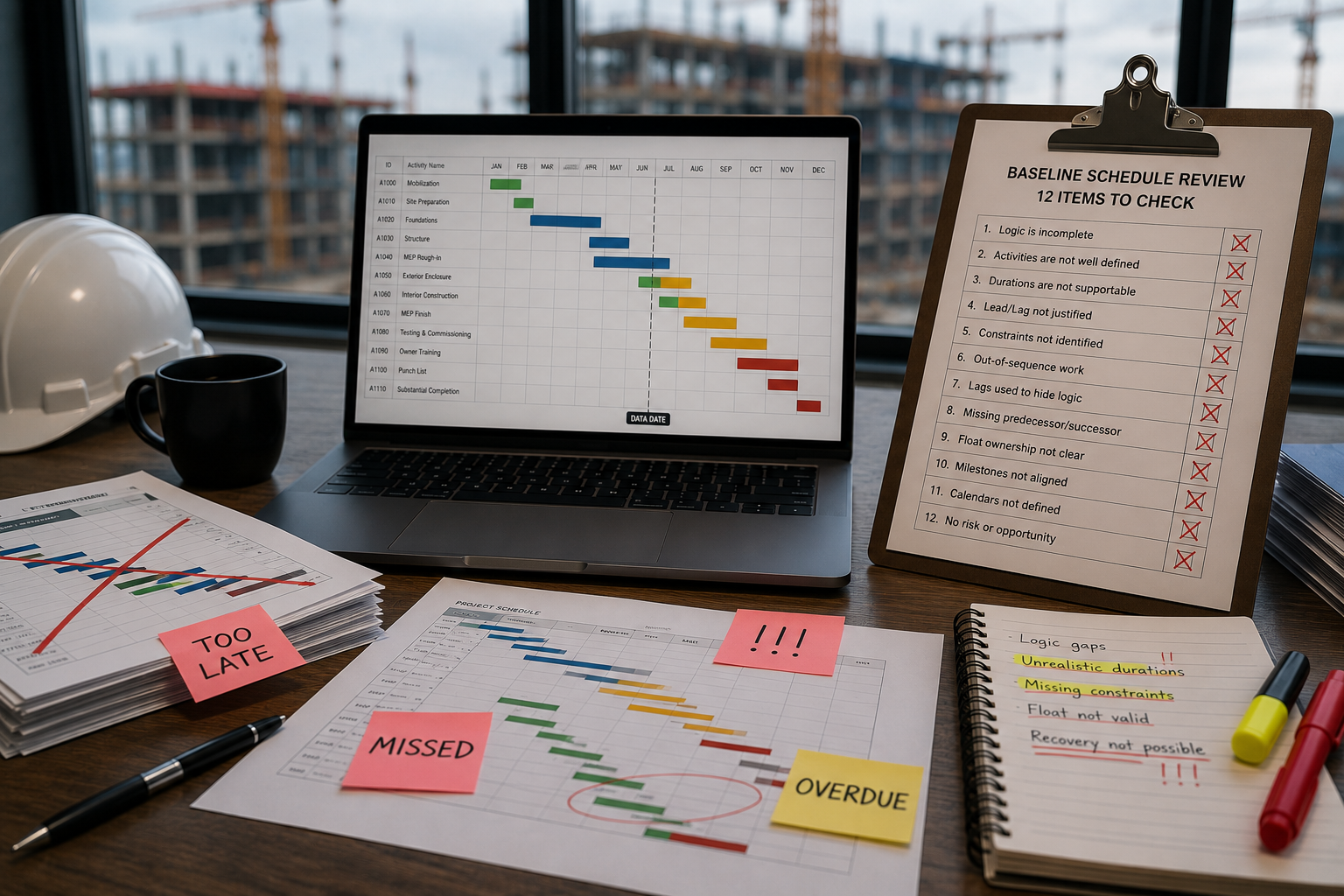
A treatment plant upgrade includes a tie-in that requires taking a process train or pump station offline. The shutdown window is scheduled around a period the plant’s operations team has identified as low risk, often a seasonal low-flow period, with the construction team building the tie-in sequence around that window. The contractor’s schedule shows the tie-in as a discrete activity with a defined duration, built from a generic estimate rather than a detailed hour-by-hour sequence coordinated with plant operations.
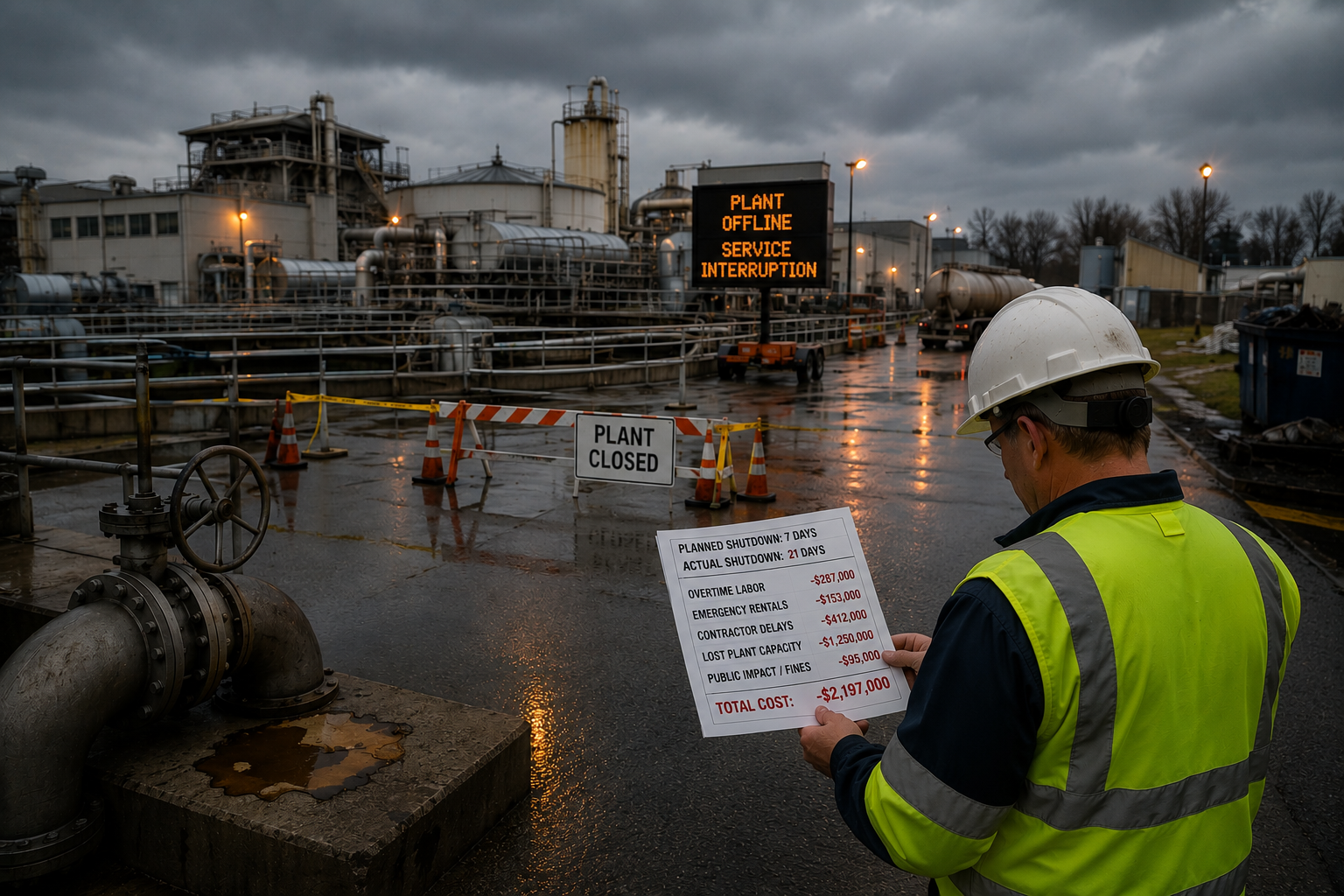
The shutdown begins. Partway through, something outside the original plan surfaces: an existing condition that didn’t match the record drawings, a piece of equipment that doesn’t isolate as cleanly as assumed, a bypass pumping configuration that turns out to be undersized for actual flow conditions on the day of the shutdown. The tie-in takes longer than planned. The shutdown window, which had a hard end point tied to the plant’s operational capacity to sustain the reduced configuration, closes before the work is complete.
What Happens Next, and Why It Costs More Than the Original Delay
The plant has to restore normal operation before the tie-in is finished, which means unwinding partial work. Reconnecting temporary bypass systems, restoring isolated equipment to service, and stabilizing the plant’s process takes real time and effort on its own, separate from and in addition to whatever remains of the original tie-in scope.
The next shutdown window isn’t immediately available. If the original window was tied to a seasonal condition, the next opportunity may be months away. If it depended on remobilizing bypass pumping equipment, that’s a second full cost of temporary system setup and teardown, on top of the first.
The delay claim that follows usually isn’t about the shutdown itself. It’s about who bears the cost of everything downstream of the missed window. The contractor typically points to the unforeseen condition as an excusable delay. The owner typically points to inadequate contractor planning, an hour-by-hour sequence that should have anticipated more contingency, or insufficient coordination with plant operations before the shutdown began. Both positions can have real merit, which is exactly why this type of dispute tends to be expensive and slow to resolve, dragging in forensic schedule analysis to establish what a reasonably planned shutdown sequence should have anticipated versus what genuinely couldn’t have been foreseen.
The owner absorbs real operational cost during the entire extended window, regardless of how the eventual claim resolves. Extended bypass pumping, extended temporary operational configurations, and in some cases regulatory reporting or permit implications from operating outside normal conditions longer than planned, all accrue during the dispute period, independent of whatever gets resolved contractually months or years later.
What a Properly Built Shutdown Sequence Actually Requires
The single biggest difference between a shutdown that holds and one that doesn’t is whether the sequence was built at the level of actual hour-by-hour field activity, coordinated directly with plant operations staff who know the specific equipment’s real behavior, rather than a generic duration pulled from a similar project elsewhere. That level of detail surfaces the kind of surprises, an isolation valve that doesn’t seal as expected, a bypass configuration that’s marginal for actual flow, before the shutdown starts, when there’s still time to plan around them, rather than during the shutdown, when there isn’t.
It also requires realistic contingency built into the shutdown window itself, not just the surrounding project schedule. A shutdown planned to the exact minimum duration required, with no buffer for the unexpected condition that shows up on a meaningful percentage of tie-ins this complex, is a shutdown planned to fail under completely normal, foreseeable uncertainty.
The owners who avoid this pattern aren’t the ones who got lucky. They’re the ones whose project controls function insisted on a detailed, field-validated shutdown sequence and real contingency before the window was locked in, not after the first attempt ran long.