Why Federal Capital Projects Need an Owner-Side Scheduler Who Isn’t the Contracting Officer’s Rep
A Contracting Officer’s Representative has a defined job, technical monitoring of contract performance, confirming deliverables, flagging issues for the contracting officer. It’s a real and necessary function. It is not the same job as owner-side project controls, and federal capital programs that ask one person to do both are asking for a level of independent schedule scrutiny that the role’s own structure doesn’t actually allow.
What a COR Is Actually Responsible For
A COR’s authority and responsibility are defined by their appointment letter and typically focus on technical oversight, confirming that contract deliverables meet specifications, monitoring contractor performance against the contract terms, and communicating findings to the contracting officer, who holds the actual authority to modify the contract, direct changes, or resolve disputes. The COR role is fundamentally about verifying compliance with what’s already been agreed, not about independently interrogating whether the schedule itself is sound, defensible, or heading toward a problem the contract terms haven’t yet caught up with.
Why That’s a Different Job From Owner-Side Scheduling
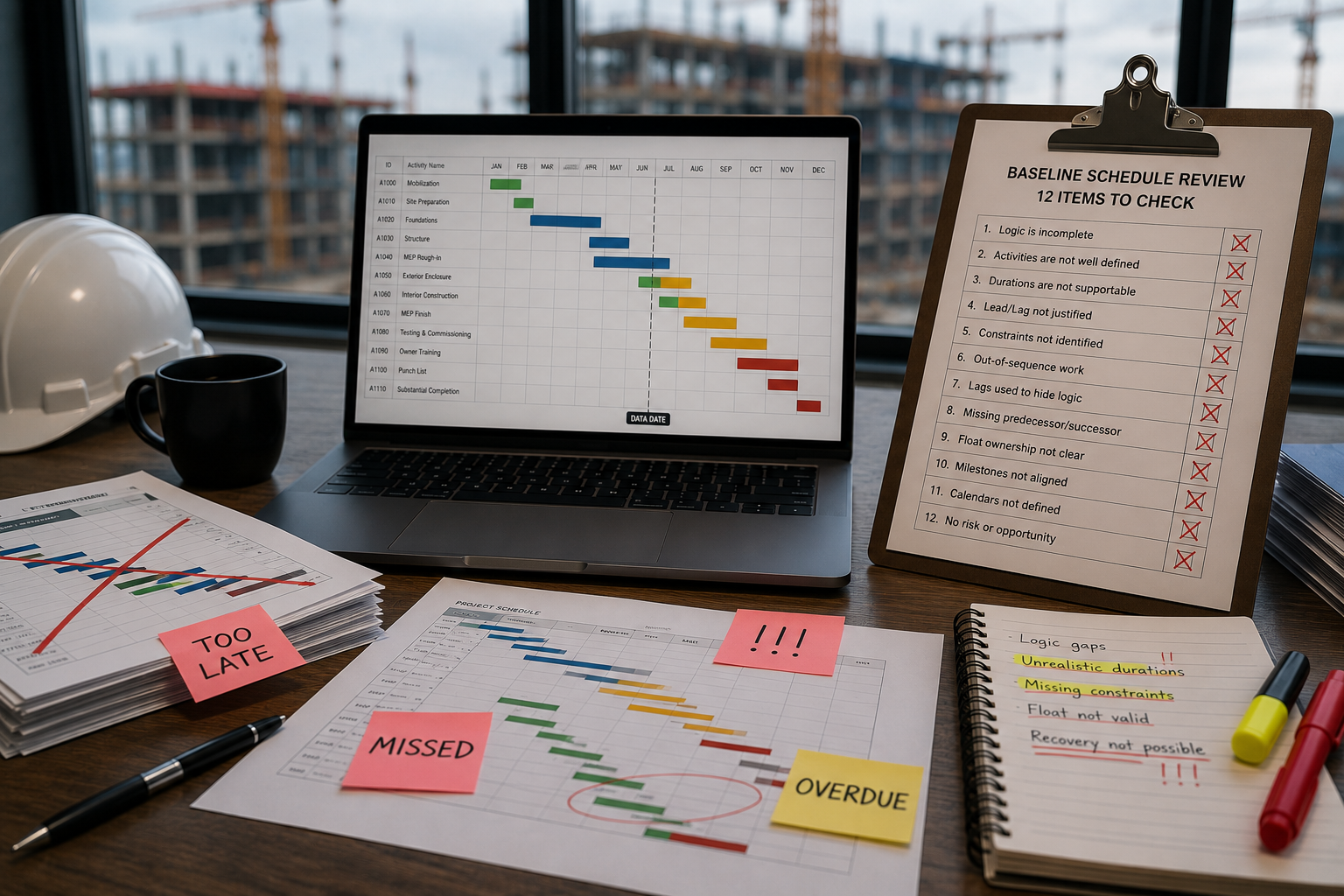
Owner-side project controls is fundamentally a forward-looking function. It’s not primarily about confirming that this month’s deliverable matched the contract requirement. It’s about interrogating the schedule logic itself, stress-testing float allocation, flagging when a contractor’s reported percent complete doesn’t match physical progress, and surfacing schedule risk before it becomes a missed milestone the COR then has to report after the fact.
Those are genuinely different orientations. A COR’s job is largely reactive and compliance-focused by design, checking delivered work against agreed requirements. An owner-side scheduler’s job is proactive and analytical, questioning whether the plan itself still holds up, independent of whether the contractor is technically meeting this month’s reporting requirements.
Where Collapsing the Two Roles Actually Breaks Down
When a single person or team is asked to serve as both COR and de facto owner-side scheduler, the COR’s compliance-monitoring workload tends to consume the bandwidth that independent schedule analysis actually requires. Reviewing certified payroll, confirming deliverable acceptance, and managing the routine administrative cadence of COR duties is a real, ongoing time commitment. Deep schedule risk analysis, the kind that catches a logic error in a critical path calculation or flags that reported percent complete doesn’t match observable field progress, requires a different kind of sustained attention that a fully loaded COR role often doesn’t have room for.
There’s also a structural tension in asking the same person to both monitor compliance with the current contract terms and independently flag that the schedule itself might need to change. A COR operating strictly within their appointment authority may be institutionally cautious about surfacing schedule concerns that go beyond straightforward compliance monitoring, not because of any individual failing, but because that kind of proactive schedule challenge sits outside what the COR role is actually designed and authorized to do.
What Independent Owner-Side Scheduling Actually Adds
An owner-side scheduling function operating alongside, rather than folded into, the COR role brings a specific kind of scrutiny the COR role isn’t built to provide. It can independently model schedule risk using the same CPM logic the contractor is using, rather than relying solely on the contractor’s own reported status. It can flag a logic error or an unrealistic duration assumption before it becomes a missed milestone, rather than after. And it can maintain a level of technical schedule fluency, comfortable interrogating float allocation, cost loading, and critical path logic in detail, that isn’t the primary skill set the COR role was designed to require.
This isn’t a criticism of the COR function. It’s a recognition that federal capital programs are asking two genuinely different jobs to be done well, and expecting one role, with one set of authorities and one set of time constraints, to do both is a structural gap that shows up as reduced schedule visibility long before it shows up as an obvious problem on paper.
The programs that catch schedule risk early aren’t the ones with the most diligent COR. They’re the ones that built independent owner-side schedule scrutiny into the program from the start, as its own function, answerable for exactly the kind of forward-looking analysis the COR role was never designed to carry alone.