Why Water Treatment Plant Shutdown Windows Are the Least Forgiving Schedule Constraint in Construction
Most construction schedule constraints are elastic, at a cost. A late inspection can be rescheduled. A delayed material delivery can be expedited, or absorbed with resequencing. A shutdown window at an operating treatment plant doesn’t bend the same way. Miss it, and the project isn’t waiting days. It’s often waiting for the next window the plant can actually support, which might be weeks or months away, and there is frequently no amount of money or expediting that changes that math.
Why Shutdown Windows Exist and Why They’re So Narrow
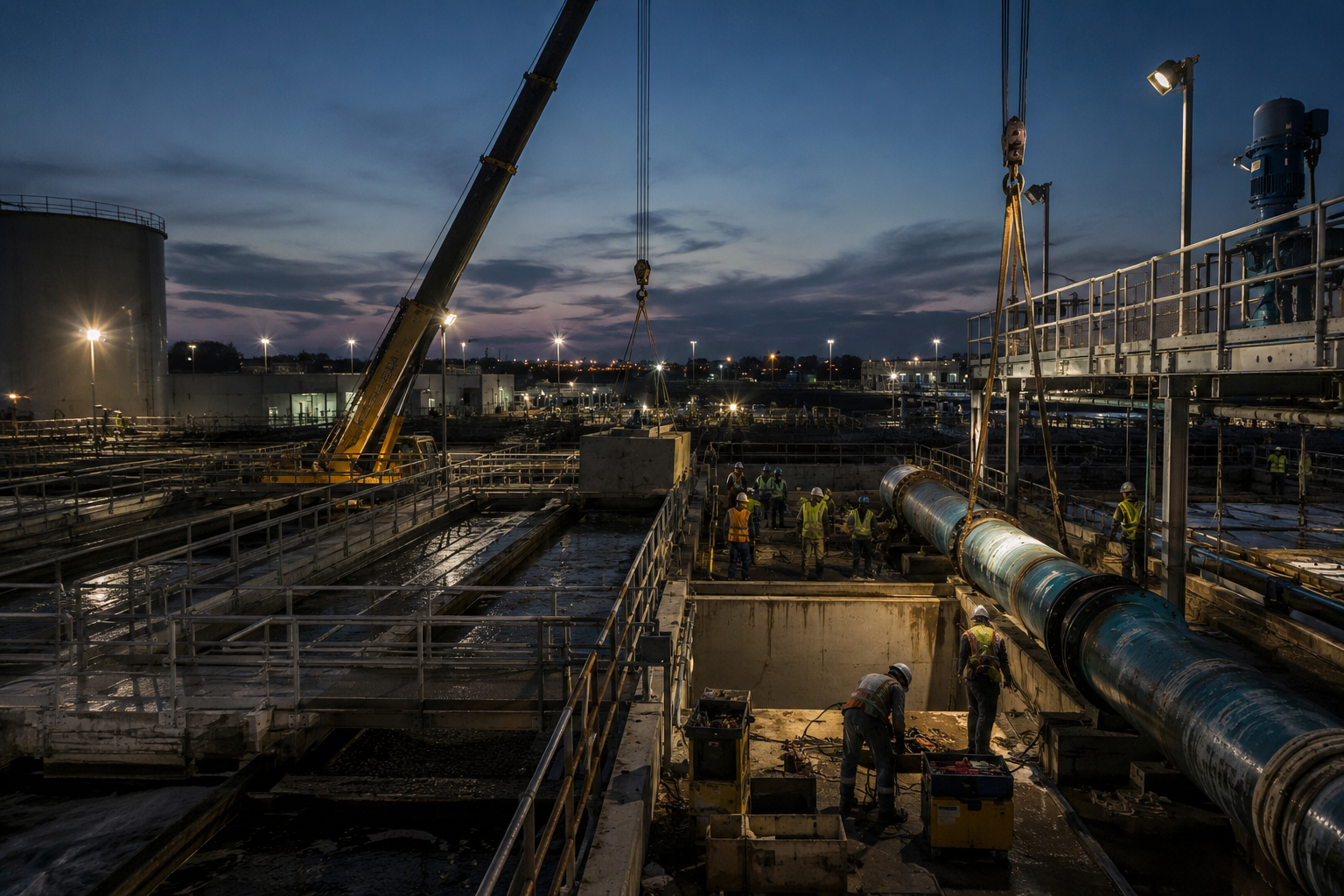
Water and wastewater treatment plants operate continuously, treating flow that doesn’t stop arriving because a construction project needs a tie-in completed. Taking a process train, a pump station, or a section of piping offline for tie-in work requires either redundant capacity elsewhere in the plant to absorb the flow, temporary bypass pumping to route flow around the affected section, or, for some facilities, a period of naturally lower flow, often seasonal, where the plant has enough margin to operate short-handed for a limited window.
None of those options are available indefinitely. Redundant capacity has its own limits and its own maintenance needs that compete for the same window. Bypass pumping is itself a significant temporary system that has to be planned, permitted in some jurisdictions, and physically set up and torn down, adding real cost and its own schedule risk. And low-flow periods are, by definition, seasonal and time-limited, not available on demand.
What Makes Missing a Window So Costly
The next available window often isn’t a fixed distance away. Unlike a missed inspection that can typically be rescheduled within days, a missed shutdown window’s replacement depends on the specific constraint that created the original window. If it was a seasonal low-flow period, the next window might genuinely be a year away. If it depended on temporary bypass capacity that has to be demobilized and remobilized, the cost of trying again isn’t just time. It’s the full cost of the temporary system a second time.
Regulatory and permit constraints can add their own rigidity. Many treatment plants operate under discharge permits that limit or prohibit bypass discharge beyond specific conditions, meaning the plant’s ability to accommodate a shutdown isn’t just an operational question but a regulatory one, with its own approval process that doesn’t move quickly if a shutdown needs to be rescheduled or extended.
A missed window can cascade into every downstream project milestone, not just the immediate tie-in. If the shutdown window was the gating event for a broader project phase, testing, commissioning, or handover of an entire process train, missing it doesn’t just delay the tie-in itself. It delays everything downstream of it by the full distance to the next available window, which is often a much larger schedule impact than the tie-in work itself would suggest.
Why This Constraint Gets Underweighted in Schedule Development
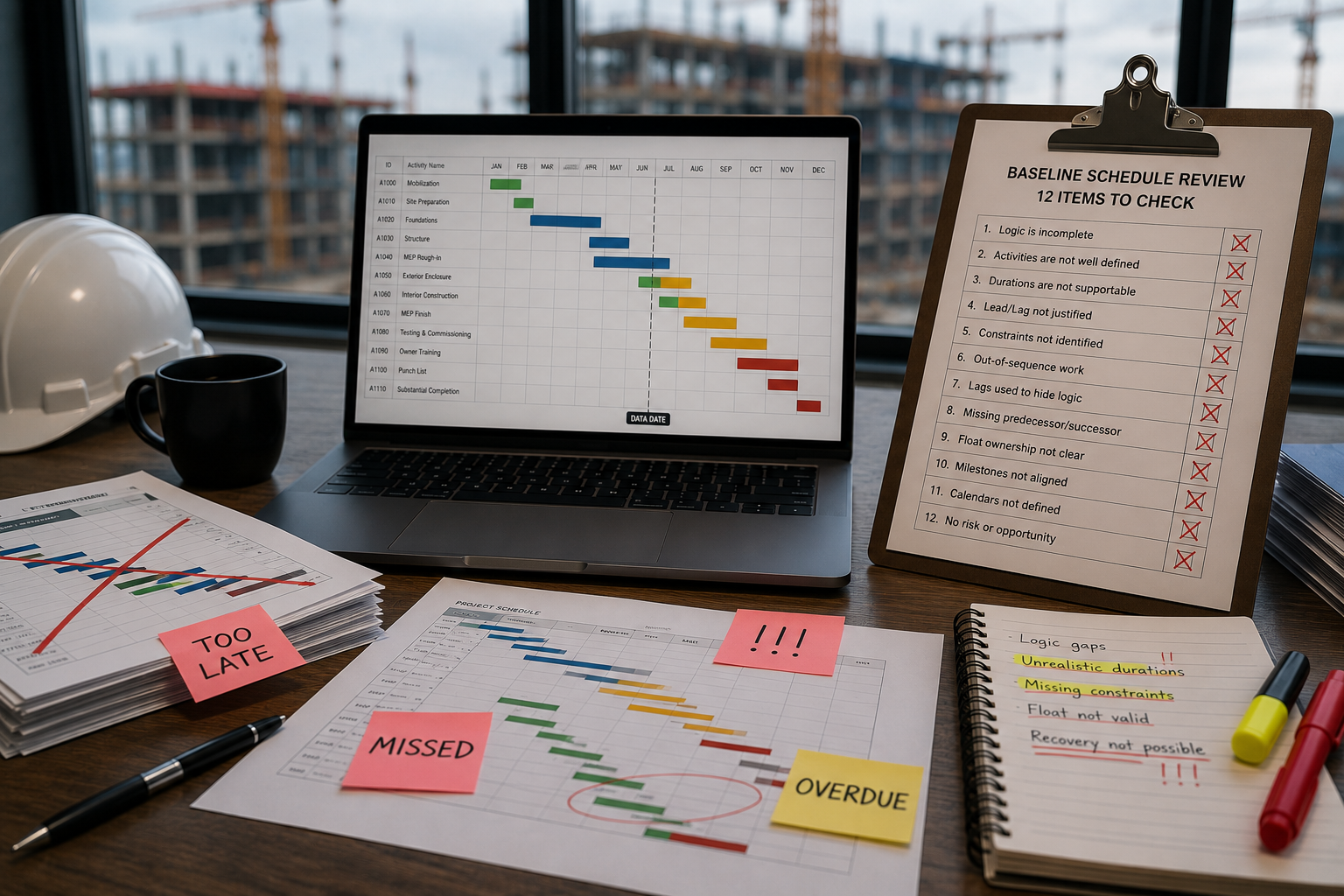
Schedulers trained primarily on commercial or vertical construction are used to constraints that flex under pressure, given enough resources or enough negotiation. Shutdown windows don’t behave that way, and a schedule built with the same assumptions that work for a typical trade sequence tends to treat the shutdown date as a target to hit rather than a hard constraint everything else has to be built around.
The correct posture is closer to the opposite. Every activity feeding into a shutdown window, procurement of any equipment required for the tie-in, completion of any prerequisite work that has to be done before the shutdown starts, and readiness of the bypass or redundant capacity system if one is required, should be scheduled with the shutdown date as the fixed point, working backward with real float protecting it, rather than scheduled forward and hoped to land on time.
What Owner-Side Controls Should Actually Do
The shutdown window and everything feeding into it deserves its own explicit risk review, separate from the general project schedule risk assessment, specifically asking what happens if any single predecessor to the shutdown slips. If the honest answer is that the project waits months for the next window, that answer should shape how much float, and how much procurement urgency, gets applied to everything feeding that date, well before the shutdown date itself gets close enough that there’s no time left to react.